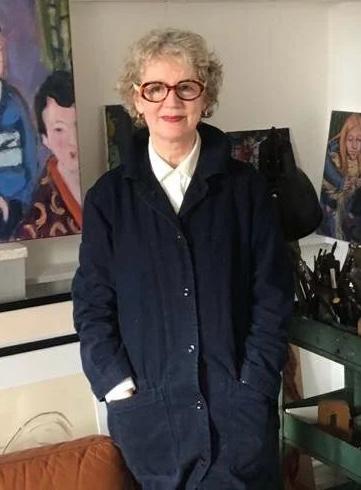
Dickens works across oils, acrylics, gouache, and bold fabric collage. Her practice is rooted in close looking, travel, imagination, and the rhythms of lived experience. Since moving away from city life, her work has taken on a renewed sense of freedom, with compositions that often balance wit, elegance, and emotional suggestion.
Her exhibition history includes solo presentations with Cricket Fine Art, London, The Osborne Studio Gallery, London, The Fosse Gallery, Gloucestershire, and The Belgrave Gallery, London. She has also shown in mixed exhibitions with venues including The Royal Academy Summer Exhibition, and Birnam Wood Galleries, New York.
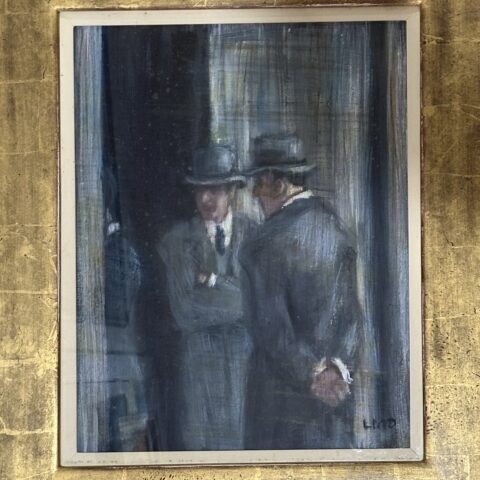
The work presented in this exhibition, The Gentlemen, captures two formally dressed figures in a muted, rain washed interior or street scene. Their top hats, dark coats, and indistinct faces create an atmosphere of secrecy, restraint, and old world ceremony. The softened forms and vertical brushwork give the painting a veil like quality, as though the viewer is glimpsing a private exchange through glass, weather, or memory. Its subdued palette and blurred movement offer a more enigmatic counterpoint to Dickens’ brighter narrative works, suggesting quiet tension, social ritual, and the charm of a half remembered encounter.
Dickens’ work invites the viewer to pause over the small theatre of human presence. Through gesture, atmosphere, and suggestion, she transforms fleeting moments into images that feel intimate, curious, and full of untold story.